


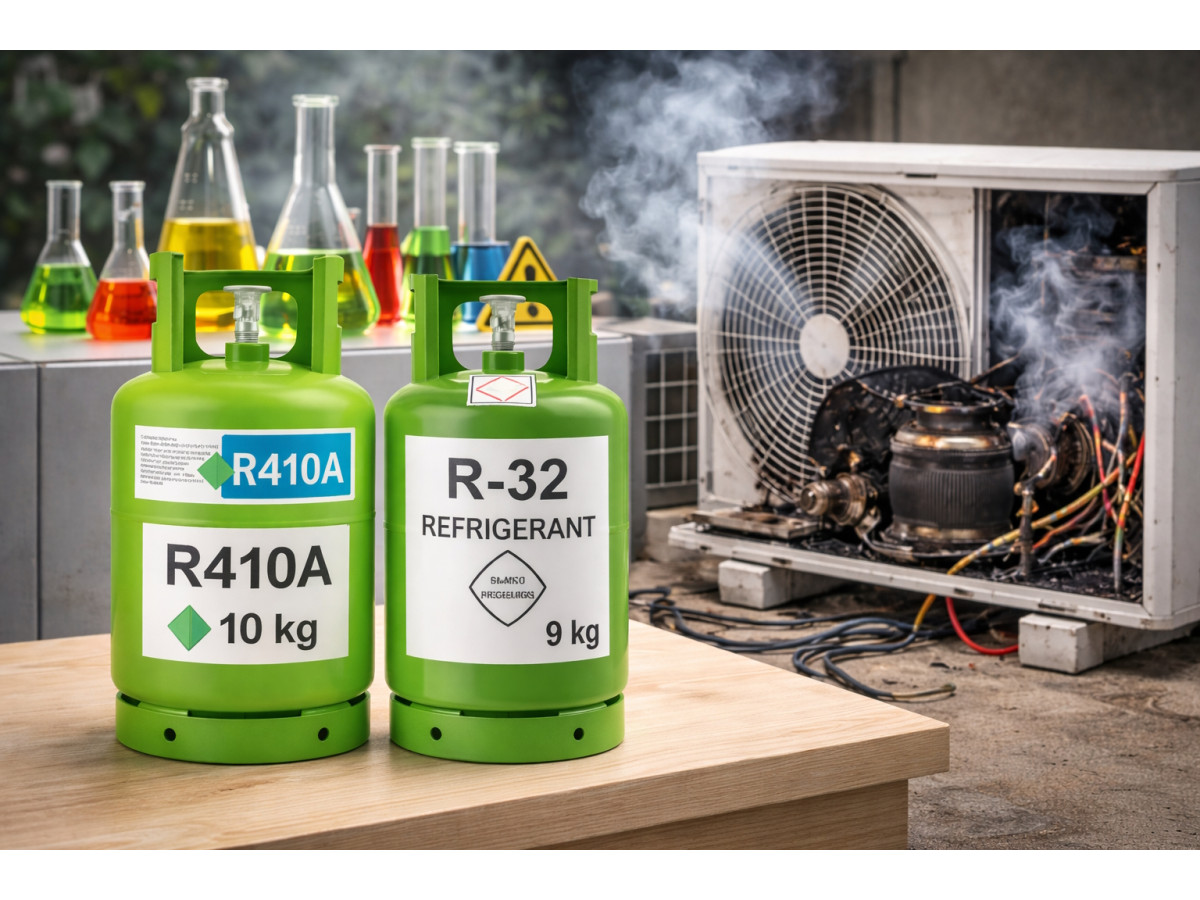
A low price is a reason to compare the offer carefully, not proof that refrigerant is counterfeit. Order volume, packaging, delivery terms, stock clearance and the commercial agreement can all affect cost. An expensive cylinder is not automatically a guarantee of quality either.
The practical question is whether the supplied product has the correct identity, documented origin and suitable quality for the intended equipment, and whether its supply and use comply with applicable rules.
Compare equivalent offers before judging the price
Check the exact refrigerant, net gas mass, virgin or reclaimed status, taxes, transport and cylinder ownership or deposit. A refundable deposit is a cash-flow item rather than the same kind of expense as gas consumed on a job. A low headline price may cover a smaller quantity or exclude delivery.
Also confirm the offer date and validity. Prices from different periods or with different payment terms cannot be treated as directly comparable market evidence. First establish compatibility using our refrigerant purchasing checklist.
Which documents help verify a supply?
- Supplier and invoice details: an identifiable business and a clear description of the product supplied.
- Label and batch reference: a consistent refrigerant designation and traceability between cylinder and accompanying documents.
- Safety data sheet: information on hazards, handling and storage for that product.
- Quality evidence: where required for the purchase, a batch analysis or other agreed documentation stating the tests, results and applicable specification.
- Container documentation: appropriate markings, inspection status and refill/return arrangements for the intended market.
A safety data sheet is not a batch purity certificate. Equally, a generic certificate with no link to the delivered material does not establish its composition. Ask what was actually tested rather than accepting the word “certified” without explanation.
Recovered, recycled and reclaimed are different
Recovered refrigerant has been removed from equipment and collected. Recovery alone does not establish purity or suitability for another system.
Recycled refrigerant has undergone basic cleaning for reuse, such as filtration and drying. That does not automatically mean it meets the full specification required for reclaimed product.
Reclaimed refrigerant has been reprocessed to achieve performance equivalent to virgin material for its intended use. An applicable quality specification, such as AHRI Standard 700 where relevant, and supporting analysis provide a basis for assessing the product. Properly reclaimed gas is not inherently inferior or suspicious.
However, reclaimed status does not remove equipment-compatibility requirements or automatically permit every application. Check the relevant use restrictions, labelling and documentation.
Why pressure cannot certify refrigerant quality
Pressure depends on temperature, phase conditions and composition. Some products or mixtures can produce similar readings. A pressure-temperature comparison may reveal an inconsistency, but it cannot reliably identify every blend or quantify moisture, acidity and other contaminants.
A refrigerant identifier can be useful within its specified capabilities. It does not necessarily replace laboratory testing for a full quality assessment. Never assess gas by smelling it, releasing a sample or performing improvised flammability tests.
What the actual equipment risks are
An incorrect composition, moisture, non-condensable gases or other contamination can affect pressures, lubrication, corrosion and operating performance. The outcome depends on the contaminant, its concentration and the system. These risks relate to non-conformity, not to a particular price level.
GWP is another separate property: a lower value does not prove purity or reduce every environmental impact. Our explanation of GWP and refrigerant selection helps distinguish climate characteristics from quality checks.
How to respond to a questionable delivery
Do not connect a suspect cylinder. Keep it safely segregated, record its label and batch number, and ask the supplier to clarify any mismatch. Agree testing or return procedures before use. If unknown gas has already entered equipment, inform the service company so it can prevent contamination of recovery equipment and other stock.
Use the refrigerant catalogue to define the required product, and the wholesale supply page to request an offer with clear quantities, documents and cylinder terms. Compare verified specifications and total purchasing conditions, rather than using price alone as a quality test.
Write a comment