


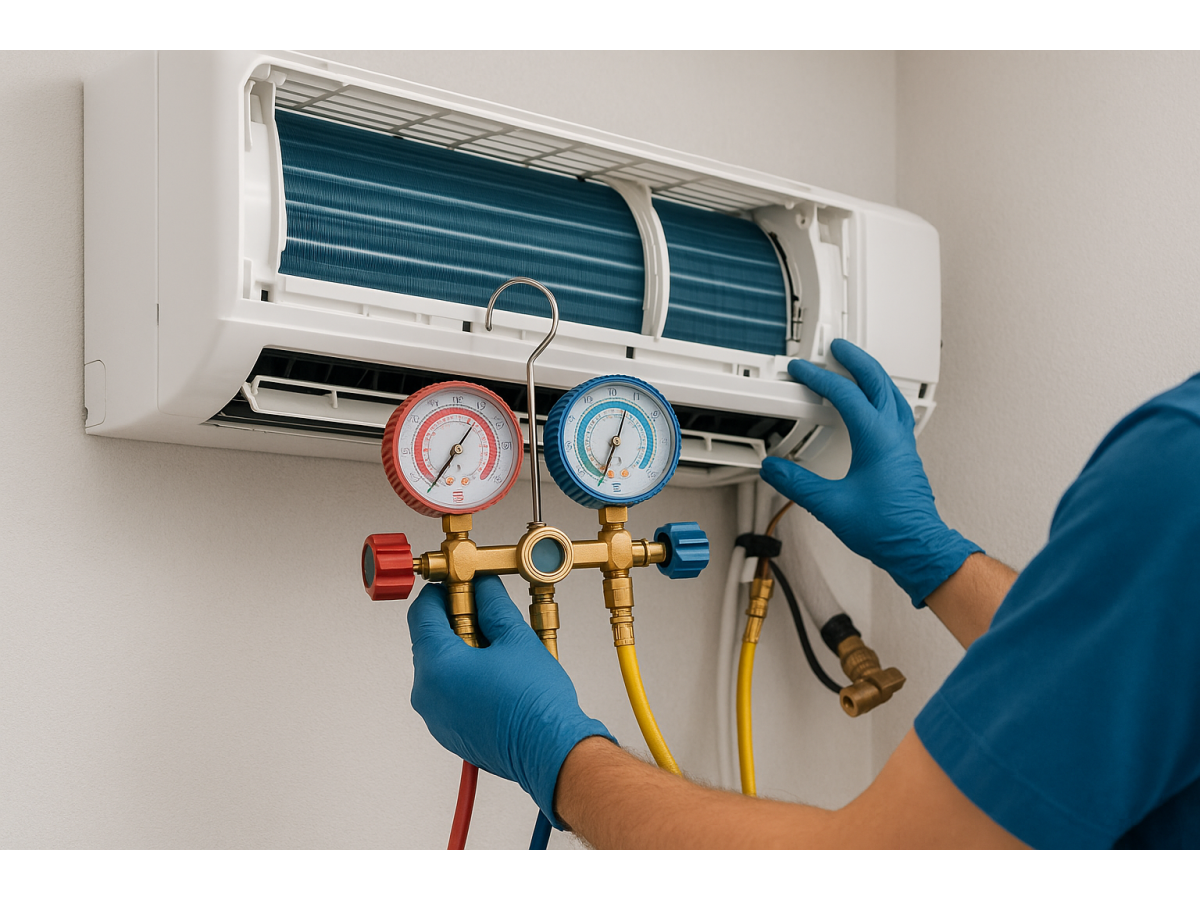
An air conditioner needs planned maintenance, but it does not need an automatic refrigerant top-up at every visit. The appropriate schedule depends on the manufacturer's instructions, operating conditions and any mandatory checks. A blanket interval of one or two years is not suitable for every installation.
Separate three kinds of maintenance
- User care: checking accessible filters, keeping air paths clear and observing drainage, as the appliance manual permits.
- Professional maintenance: inspecting heat exchangers, fans, electrical and control functions, condensate drainage and overall performance.
- Mandatory leak checks: specific legal duties that apply to qualifying equipment, independently of the general cleaning schedule.
These tasks may have different frequencies. Cleaning a filter does not require opening the refrigerant circuit, and a service appointment does not automatically require connecting gauges or adding gas.
How to set a useful service schedule
Start with the maintenance instructions for the exact indoor and outdoor unit combination. Then consider operating hours, year-round heating, dust, grease, coastal exposure and access for cleaning. A heavily used commercial installation may need a different programme from an occasionally used bedroom unit.
Agree a task list with the service company: who checks the filters, who cleans each component, what triggers an extra visit and when the next professional inspection is due. Update it after a fault, a change in use or evidence that components become dirty sooner than expected.
In the EU, statutory leak-check obligations depend on factors including equipment category, refrigerant, charge and applicable exemptions. Where required, the relevant intervals and records must be followed; a generic domestic maintenance recommendation does not replace them.
Symptoms that need diagnosis, not an immediate gas order
| Observation | Possible explanations |
|---|---|
| Weak airflow | Dirty filter, obstructed air path or fan problem |
| Poor cooling | High heat load, dirty heat exchanger, control fault or refrigerant-circuit problem |
| Ice during cooling | Restricted airflow, metering or sensor fault, or an incorrect refrigerant charge |
| Water from the indoor unit | Drainage or installation problem; not proof of refrigerant shortage |
| Higher electricity use | Different weather, settings, operating hours or an equipment fault |
Record the operating mode, outdoor conditions, error codes and when the change appeared. This helps the technician reproduce the problem. Persistent icing or repeated protective shutdowns call for assessment; repeatedly restarting the unit is not a repair.
What a refrigerant check can actually establish
Most owners cannot read a reliable “gas level” from the appliance. The technician evaluates the specific design and operating conditions, using appropriate temperature, pressure and other measurements where necessary. One pressure reading does not determine the exact mass of refrigerant or prove that a leak exists.
If a leak is confirmed, it must be located and repaired before restoring the correct charge. Any required recovery, tightness verification, evacuation and charging must follow the manufacturer's procedure and applicable rules. Routine venting is not acceptable.
The article on five refrigerant myths explains why a sealed circuit does not consume gas as fuel. Our guide to refrigerants in cold-storage installations shows why business equipment also needs maintenance based on its actual operating demands.
What to ask for after the visit
Request a report identifying the unit, checks and cleaning performed, faults found, repairs, and any refrigerant recovered or added. It should explain why the next inspection is recommended and what the owner should monitor in the meantime.
Buy refrigerant only after the service company confirms a genuine requirement, the exact product and quantity, and the applicable purchasing conditions. Use the refrigerant catalogue for that specification; the R410A 10 kg page is relevant only to approved R410A equipment. Weak cooling alone is not a reason to order it.
Write a comment