


Choosing a refrigerant starts with the equipment specification. These answers explain how to identify the correct product, understand environmental indicators, recognise problems and prepare for purchasing or servicing an air-conditioning or refrigeration system.
What is a refrigerant?
A refrigerant is the working fluid that circulates through a refrigeration circuit, absorbing heat in one part of the system and releasing it elsewhere. It allows air conditioners, heat pumps and refrigeration equipment to transfer heat.
Refrigerants differ in their operating pressures, compatibility with materials and oils, safety classifications and environmental characteristics. They cannot be selected solely by price or availability.
How do I identify the correct refrigerant for my equipment?
Check the equipment nameplate, technical manual and service records. If the system has undergone an approved conversion, consult the updated label and conversion documentation.
Equipment age, room size and cooling capacity do not determine the refrigerant on their own. R410A is not a universal choice for newer air conditioners, and R134a is not a universal choice for older units. If the label is missing or unclear, identify the model and ask a qualified technician to confirm the specification.
For a more detailed checklist, read our guide to choosing the correct refrigerant for an air conditioner.
Can different refrigerants be mixed or substituted?
No. Do not top up one refrigerant with another. R410A, R134a and R32 are not interchangeable during routine servicing. Mixing products creates an unspecified composition that can affect performance, safety and subsequent recovery.
A factory-produced blend has a controlled composition; adding different gases on site is not equivalent. A change of refrigerant requires documented compatibility and an approved procedure for the specific equipment. An oil change or circuit flush alone does not establish suitability.
What do GWP and ODP mean?
GWP, or global warming potential, compares a gas's warming effect with that of carbon dioxide over a defined period. GWP100 refers to a 100-year period.
ODP, or ozone depletion potential, describes a substance's potential to damage the ozone layer. A refrigerant can have zero ODP and still contribute significantly to climate warming. These indicators describe different environmental effects.
Is R134a a low-GWP refrigerant?
No. Using the IPCC Fourth Assessment Report methodology, R134a has a GWP100 of 1430, while R410A has a rounded value of 2088. R134a therefore has a lower GWP than R410A, but it should not be described as a low-GWP refrigerant.
Both have zero ODP, but both are greenhouse gases. Neither should be presented as environmentally harmless.
Does refrigerant need replacing every year?
No. In a correctly charged, leak-tight circuit, refrigerant circulates rather than being consumed like fuel. There is no universal requirement to replace or top it up every year.
Recharging may be necessary after a leak, circuit repair or correction of an incorrect charge. Regular maintenance and any applicable leak-check requirements still need to be followed.
How can I recognise a refrigerant leak, and what should I do?
Poor cooling or ice formation can indicate a refrigerant problem, but they can also result from restricted airflow, dirty heat exchangers or other faults. These symptoms alone do not confirm a leak.
Arrange professional diagnosis. If a leak is confirmed, it should be located and repaired, followed by the necessary checks and charging procedure. Repeatedly adding refrigerant does not repair the underlying fault. Refrigerant must not be deliberately released into the atmosphere.
If there is an obvious release of gas, leave the affected area and follow the emergency instructions in the product safety data sheet.
Can I recharge an air conditioner myself?
Charging and recovery should be carried out by appropriately qualified technicians using compatible equipment. The work involves checking the refrigerant, oil, charge quantity, operating conditions and system integrity.
In the EU, technicians performing regulated work must hold the relevant certification or training attestation required under Regulation (EU) 2024/573 and the applicable implementing rules. The requirements depend on the equipment and activity.
How much refrigerant does my system need?
Use the manufacturer's charging instructions for the exact model and installation. Some systems require an adjustment for pipe length or other installation details.
The required charge cannot be determined from the refrigerant name or a single pressure reading. A cylinder containing 10 or 12 kg is a commercial package, not an instruction to put that quantity into one unit. Both undercharging and overcharging can cause problems.
How should refrigerant cylinders be stored?
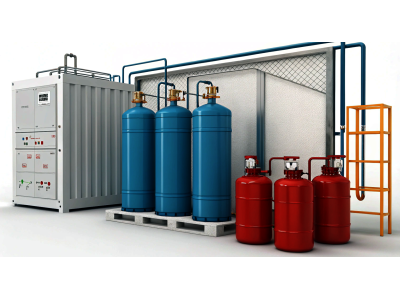
Follow the cylinder label, safety data sheet and manufacturer's storage instructions. Secure cylinders against movement, protect them from excessive heat and direct sunlight, and use a suitable ventilated storage area.
Protect valves from damage and observe the specified storage position, temperature limits and any additional requirements for flammable refrigerants. Storage and transport requirements are not necessarily identical.
Does a lower-GWP refrigerant automatically reduce electricity bills?
No. GWP describes climate impact from refrigerant emissions, not the electricity consumption of the equipment. Efficiency also depends on system design, operating conditions, installation and maintenance.
When comparing new equipment, use performance data measured under comparable conditions and relevant indicators such as SEER or SCOP. Changing the gas in an existing unit without an approved conversion is not an energy-saving measure.
What should I check before ordering refrigerant?
- Equipment specification: confirm the model and exact approved refrigerant designation.
- Required quantity: establish the net refrigerant amount needed and the appropriate cylinder format.
- Service requirements: confirm oil compatibility and the planned work with the technician.
- Product information: check the label, safety data sheet and available batch documentation.
- Purchase conditions: clarify any documentation required for the intended purchase and use.
For equipment that specifically requires these products, see our R410A refrigerant in a 10 kg cylinder and R134a refrigerant in a 12 kg cylinder. Confirm compatibility before selecting the cylinder size or comparing the price per kilogram.
Write a comment