


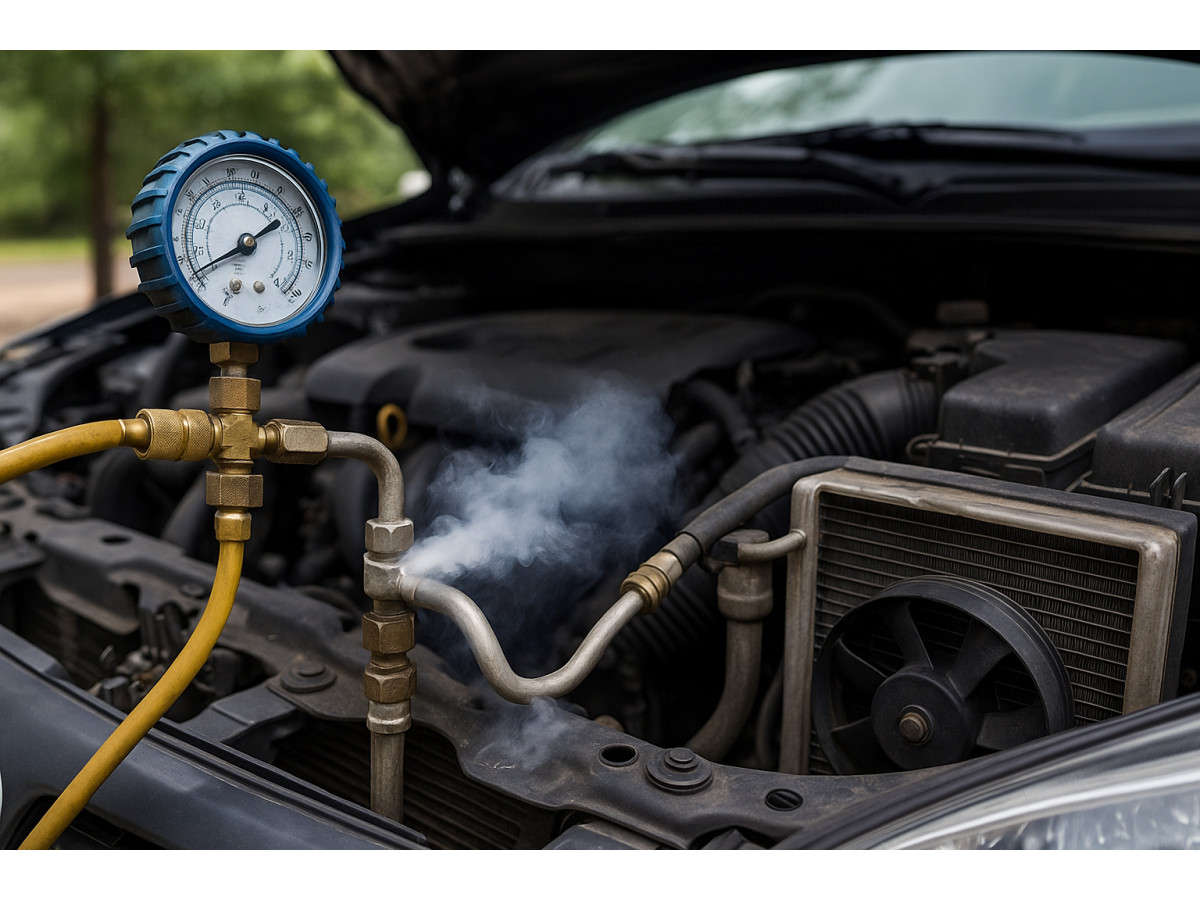
Refrigerant Leak in a Car Air Conditioning System: Causes, Symptoms, Recharge Frequency, and Can You Do It Yourself?
Car air conditioning is no longer a luxury—it’s an essential comfort feature, especially during hot weather. It also plays an important role in winter by reducing humidity and preventing fogged windows. One of the most common issues drivers face is a gradual loss of cooling performance, often caused by a refrigerant leak. In this article, we’ll explain why leaks occur, how to recognize low refrigerant levels, how often recharging is needed, why running an “empty” system is risky, and whether DIY servicing makes sense.
Why refrigerant leaks occur
A vehicle’s air conditioning system operates under high pressure and constant vibration. It’s exposed to heat from the engine bay, temperature changes, moisture, road debris, and chemical residues from winter road treatments. Over time, these factors can compromise system tightness.
Normal loss vs. a real problem
A very small refrigerant loss over several years can be considered normal. However, there’s a clear difference between gradual aging and a fault:
-
if cooling performance declines slightly over many years, it may be normal wear;
-
if cooling drops noticeably within weeks or a single season, a leak is very likely present.
In short, rapid performance loss almost always points to a leak that needs attention.
Most common leak points
In practice, refrigerant leaks most often occur at:
-
the condenser — vulnerable to stone impacts, corrosion, and road salt;
-
seals and O-rings — rubber hardens with age and loses elasticity;
-
the compressor shaft seal — often indicated by oily residue;
-
hoses and aluminum lines — wear near mounting points or micro-cracks;
-
service ports — may leak after improper connection.
Tip: refrigerant usually escapes together with compressor oil, so oily dirt buildup around fittings is one of the most reliable visual clues.
Symptoms of low refrigerant levels
What the driver notices
-
weaker cooling compared to previous seasons;
-
poor performance at idle or in traffic jams;
-
longer time needed to cool the cabin;
-
unstable outlet air temperature;
-
insufficient cooling during very hot weather.
Technical signs
-
oily traces on pipes, fittings, or around the compressor;
-
frosting on parts of the refrigerant line;
-
frequent compressor cycling on and off;
-
unusual noises during AC operation;
-
radiator fans running more often than usual.
How often should a car AC system be recharged
There’s no universal rule that says recharging is required every year. In a tight and properly serviced system, refrigerant can remain effective for a long time.
In real-world conditions:
-
a healthy system may only need recharging every 2–4 years or even less frequently;
-
harsh conditions, city driving, or an aging condenser can shorten that interval.
For a more detailed explanation of service intervals and why refrigerant level checks matter, see our article:
“Air Conditioner Maintenance: How Often and Why It’s Important to Check Refrigerant Levels”
Factors that affect recharge frequency
-
climate and ambient temperatures;
-
stop-and-go urban driving;
-
dirt and damage to the condenser;
-
quality of previous servicing (vacuuming and correct charging);
-
regular AC use during winter, which helps keep seals lubricated.
Why running an “empty” AC system is dangerous
Refrigerant doesn’t only cool the air—it also carries oil that lubricates the compressor. When refrigerant levels are too low:
-
lubrication becomes insufficient,
-
operating temperatures rise,
-
mechanical stress on the compressor increases.
This can result in:
-
compressor overheating or failure,
-
internal contamination of the system,
-
costly flushing and component replacement.
In short, ignoring low refrigerant levels can turn a minor issue into a major repair.
Can you recharge a car AC system yourself?
Technically, yes—but it comes with risks.
Common DIY mistakes
-
overcharging the system, leading to excessive pressure;
-
undercharging, which reduces cooling and strains the compressor;
-
introducing air and moisture without proper vacuuming;
-
using the wrong type of refrigerant;
-
failing to fix the underlying leak.
What you can safely do yourself
-
visual inspection for oily residue;
-
checking that cooling fans operate correctly;
-
replacing the cabin air filter;
-
gently cleaning the condenser from the outside.
What is best left to professionals
-
evacuating and vacuuming the system;
-
charging by exact weight according to manufacturer specifications;
-
leak detection using nitrogen, smoke, UV dye, or electronic detectors;
-
verifying operating pressures and temperatures under load.
R134a and R1234yf: key differences
Most passenger vehicles use either R134a or R1234yf refrigerant. These are not interchangeable without proper conversion procedures, and each system is designed for a specific refrigerant type.
If you want a deeper look at one of the most widely used automotive refrigerants, read:
“R134a Refrigerant: Everything You Need to Know About This Popular Refrigerant”
Always check the under-hood label or vehicle documentation before servicing the system.
Practical tips to extend AC system life
-
run the air conditioning for at least 10 minutes once a week, year-round;
-
don’t ignore early signs of reduced cooling;
-
keep the condenser clean and unobstructed;
-
inspect the system after even minor front-end impacts;
-
choose service centers that diagnose leaks instead of offering quick top-ups only.
Conclusion
Refrigerant leaks are among the most common causes of poor air conditioning performance in cars. They are usually linked to aging seals, condenser damage, or worn connections. While a properly sealed system doesn’t require frequent recharging, regular checks help prevent serious and expensive failures. Basic inspections can be done by the owner, but accurate charging and leak diagnosis require professional tools and experience. Addressing issues early ensures reliable cooling and significantly extends compressor life.