


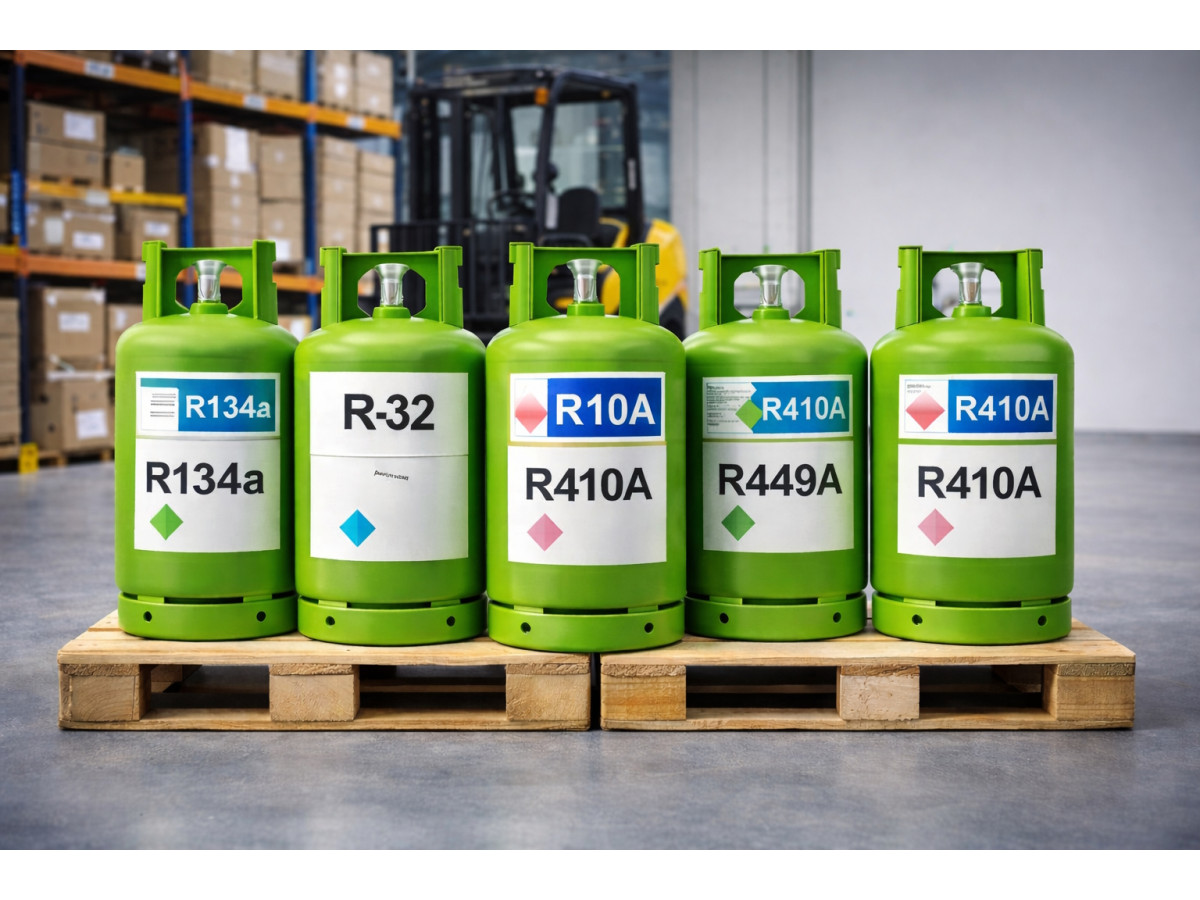
Wholesale Prices of R134a, R410A and R32 - What Determines Refrigerant Cost in the European Union?
The refrigerant market in the European Union has become increasingly regulated and price-sensitive. The EU F-Gas Regulation, quota reductions, and the transition toward lower-GWP solutions directly influence wholesale refrigerant prices across member states.
Distributors and HVAC contractors often ask: What determines the wholesale price of refrigerant in the EU, and why does the cost per kg change throughout the year?
Here is a clear breakdown of the main pricing factors.
What affects wholesale refrigerant prices in the EU?
The wholesale cost of R134a, R410A and R32 in the European Union depends on:
-
EU F-Gas quota reductions
-
Global Warming Potential (GWP) classification
-
EU production and import limitations
-
Energy and chemical raw material costs
-
Seasonal demand (Q2–Q3 peak)
-
Availability within EU distribution networks
-
ADR-certified transportation costs
Regulatory pressure is the primary driver. For a deeper understanding of how legislation impacts supply and pricing, see European F-Gas standards and their impact on the refrigerant market in 2025, which explains quota mechanisms and market consequences.
Why is the wholesale price of R134a increasing in the EU?
R134a is still widely used in commercial refrigeration and automotive systems across the European Union. However, with a GWP of 1430, it falls under stricter regulatory pressure.
Main reasons behind rising R134a bulk prices:
-
Gradual reduction of EU F-Gas quotas
-
Continued demand from the servicing sector
-
Higher compliance and production costs
-
Controlled import volumes
As the EU phases down high-GWP refrigerants, R134a wholesale price per kg becomes increasingly sensitive to quota limitations.
What influences the cost of R410A in the EU market?
R410A has been a standard refrigerant in air conditioning systems for years. Despite the shift toward R32 in new installations, a large installed base across the EU still depends on R410A.
Price drivers include:
-
Size of the existing installed base
-
Pre-summer servicing demand
-
Warehouse stock levels within the EU
-
High GWP value (2088)
Before the cooling season, R410A wholesale prices typically increase due to higher demand and limited quotas.
If you are comparing refrigerants from both a technical and cost perspective, see R410A vs R134A: which refrigerant should you choose for your equipment? for a detailed analysis.
Is R32 more price-stable in the European Union?
R32, with a GWP of 675, is considered a lower-impact alternative under EU environmental policy. It is now widely used in new air conditioning systems across the European Union.
The price of R32 depends on:
-
Growth in new HVAC installations
-
EU import volumes
-
Manufacturer production capacity
-
Ongoing F-Gas phase-down targets
Although R32 aligns better with EU climate goals, its wholesale price still fluctuates due to seasonal demand and supply constraints.
Why do refrigerant prices change annually in the EU?
The primary reason is the structured F-Gas phase-down schedule.
The European Union systematically reduces the total volume of fluorinated gases placed on the market. When supply decreases and demand remains stable, wholesale prices naturally rise.
Additionally, refrigerant pricing in the EU is influenced by:
-
Energy costs within the Union
-
Raw material pricing
-
Regulatory compliance expenses
-
Logistics and certified transport requirements
How can EU businesses reduce wholesale refrigerant costs?
HVAC companies operating within the European Union can optimize purchasing by:
-
Buying during off-peak seasons
-
Securing long-term supply agreements
-
Working with certified EU refrigerant suppliers
-
Planning annual volume requirements
Bulk purchasing within the EU distribution network often ensures more stable pricing per kg.
FAQ - Refrigerant Pricing in the EU
Why do refrigerant prices rise before summer in the EU?
Because servicing and installation demand increases significantly across member states.
Which refrigerant is currently the most cost-effective in the EU?
It depends on system type and compliance strategy under F-Gas regulations.
Will R134a prices continue to increase in the European Union?
Given the ongoing phase-down of high-GWP gases, upward pressure is likely in the long term.
Conclusion
Wholesale prices of R134a, R410A and R32 in the European Union are shaped primarily by F-Gas regulations, GWP classifications, seasonal demand, and controlled supply volumes.
For EU distributors and industrial buyers, success lies not only in finding competitive refrigerant pricing, but in building a long-term procurement strategy aligned with EU environmental policy.