


How to Detect the Problem Early and Fix It Properly
Air conditioners have become essential for both residential and commercial spaces. They maintain indoor comfort, protect sensitive equipment from overheating, stabilize warehouse temperatures, and help employees stay productive. That’s why one of the most common HVAC failures — a refrigerant leak — quickly turns into a serious issue, affecting not only comfort but also electricity costs and equipment lifespan.
Refrigerant (often referred to as freon, though modern systems use several different refrigerant types) is the core substance that makes cooling possible. When its level drops, the air conditioner simply can’t operate efficiently. This guide explains everything you need to know about refrigerant leaks: why they occur, how to recognize the symptoms, and what steps actually fix the issue instead of masking it.
Why Refrigerant Leaks Are So Common in AC Systems
Refrigerant constantly circulates in a closed loop between the indoor and outdoor units. Under normal conditions it does not evaporate, burn, or get “used up.”
If the refrigerant level is low, there is only one explanation — a leak somewhere in the system.
How the Cooling Cycle Works
Inside the evaporator coil, the refrigerant absorbs heat from the room as it evaporates. Outside, in the condenser, it releases that heat and turns back into liquid. This continuous cycle can last for decades — as long as the sealed system remains fully airtight.
If even a small amount of refrigerant escapes, several problems appear almost immediately:
-
pressure inside the system drops
-
the evaporator coil can’t absorb enough heat
-
the compressor starts running longer and harder
-
the AC consumes more electricity
-
the entire system wears out much faster
Main Causes of AC Refrigerant Leaks
1. Microcracks in Copper Lines
Copper lines expand, contract, and vibrate continuously during operation. Over time, tiny cracks develop — often invisible to the eye but large enough for refrigerant molecules to escape.
2. Worn-Out Connections and Fittings
Every joint in the system is a potential weak point. Age, temperature changes, and constant vibration gradually loosen fittings and reduce their sealing capacity.
3. Installation Errors
One of the top causes of early refrigerant leaks:
-
poorly brazed joints
-
no vacuuming during installation
-
incorrectly sized or stretched line sets
-
under-tightened flare connections
Leaks caused by installation mistakes typically appear 3–12 months after the AC is installed.
4. Corrosion
High humidity, salty coastal air, and chemical fumes speed up corrosion and damage metal components.
5. Low-quality refrigerant charging
If an installer skips vacuuming or reuses old seals, the system may never be perfectly airtight — resulting in a slow but steady leak.
10 Warning Signs of a Refrigerant Leak
-
The AC isn’t cooling as effectively
-
Ice or frost appears on the refrigerant lines
-
The compressor runs almost nonstop
-
You notice a faint chemical smell
-
Weak airflow from vents
-
Higher electricity bills (20–40% increase)
-
Unusual noises or vibrations from the outdoor unit
-
The room never reaches the target temperature
-
Frequent system shutdowns due to overheating
-
Oily residue around service valves or connections
If you notice more than one symptom, the chance of a leak is extremely high.
How HVAC Technicians Diagnose Refrigerant Leaks
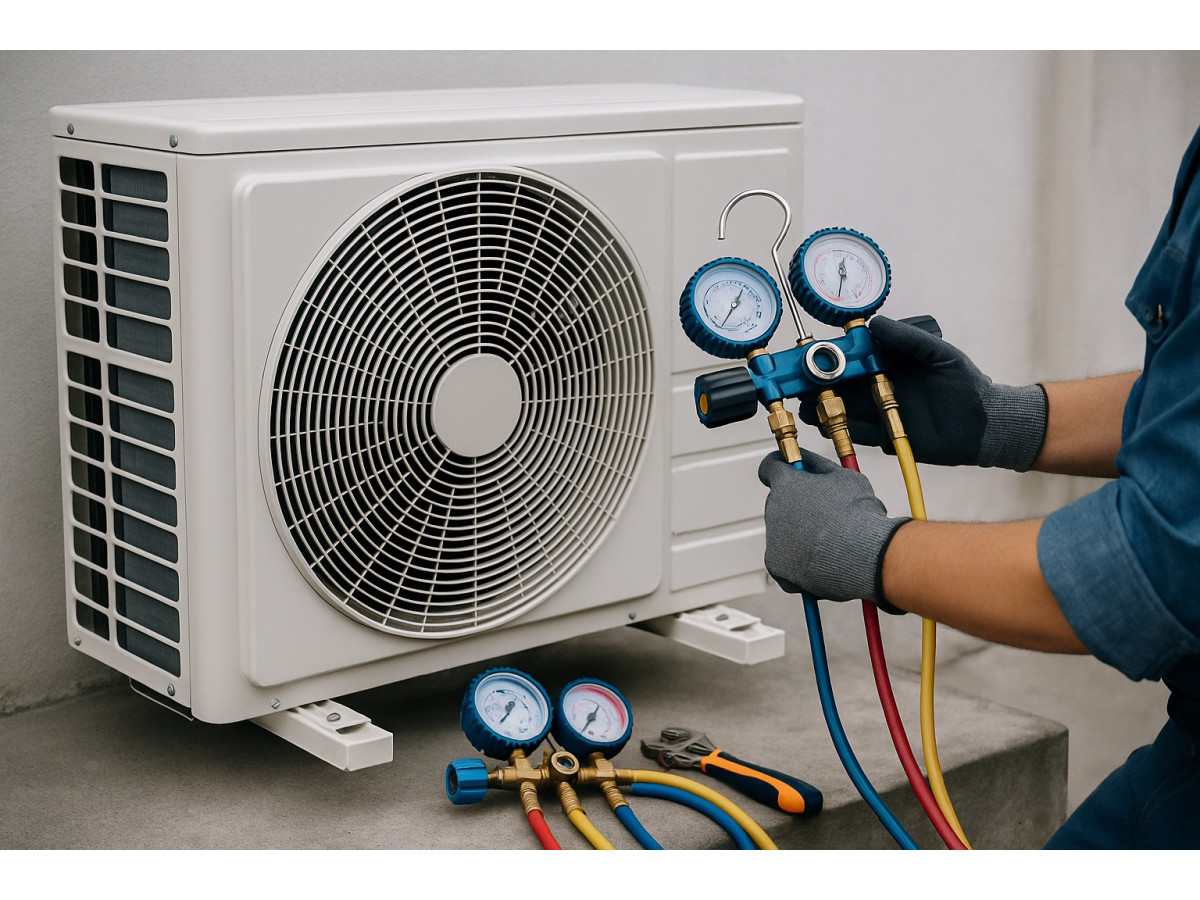
Pressure Gauge Readings
The technician compares actual system pressure with manufacturer-specified values.
Electronic Leak Detectors
Highly sensitive tools that detect even microscopic amounts of escaping refrigerant.
UV Dye Testing
A fluorescent dye is injected into the system; under UV light, the leak location glows.
Nitrogen Pressure Test
The system is filled with nitrogen under pressure — the most reliable method for finding pinhole leaks.
Soap-Bubble Test
Simple but effective for exposed fittings and line sets.
How Refrigerant Leaks Are Professionally Repaired
A proper repair includes several required steps:
-
Pinpointing the exact leak location
-
Repairing the damaged area — brazing, replacing a section of tubing, or tightening a faulty connection
-
Deep vacuuming to remove moisture and air
-
Charging the system with the correct refrigerant type and amount
-
Final system testing — checking temperature, pressure, and cycle performance
A leak is never fixed by simply “adding more refrigerant.”
Why You Should Never Just “Top Up” the Refrigerant
Refilling a leaking system without repairing it leads to:
-
compressor overheating
-
incorrect operating pressure
-
repeated refrigerant loss
-
significantly higher repair costs later
Topping up refrigerant is a temporary and risky shortcut — not a solution.
Which Refrigerant Should Be Used After the Repair?
Older AC systems (previously running on R22):
-
R407C
-
R438A
These are the most common and compatible replacements.
Modern AC systems typically use:
-
R32 (energy-efficient, lower global warming potential)
-
R410A (widely used in residential AC units)
-
R407C (in light commercial applications)
Always follow the manufacturer’s recommendation and local regulations.
How to Prevent Refrigerant Leaks in the Future
Preventative maintenance is the most effective way to avoid expensive repairs:
-
schedule AC servicing at least once a year
-
have all fittings and joints inspected
-
ensure the refrigerant pressure is checked during each maintenance visit
-
keep evaporator and condenser coils clean
Regular service keeps the system efficient and extends its lifespan.
Recommended Additional Reading
To better understand refrigerant differences, check out our article “Advantages and Disadvantages of Different Types of Refrigerants for Air Conditioners”, which explains the strengths and weaknesses of the most common refrigerant blends.
Another useful resource is “Top 5 Myths About Refrigerants: What Every AC Owner Should Know”, where we break down the misconceptions homeowners often have about refrigerants and AC performance.
Frequently Asked Questions
Can I keep using my AC if it has a refrigerant leak?
No. Doing so can damage the compressor.
How do I know if the leak is small?
The cooling performance slowly decreases.
Is it okay to delay the repair?
No more than a day or two — otherwise, long-term damage becomes likely.
Why does the AC smell strange during a leak?
Some refrigerants release a faint chemical odor when escaping.
Can I fix the leak myself?
No. Specialized tools and testing equipment are required.
How long does refrigerant charging take?
Usually 20–40 minutes, depending on system size.
Conclusion
A refrigerant leak is a serious but absolutely solvable HVAC problem. Detecting the warning signs early can save you hundreds of dollars and prevent damage to your AC system. With proper diagnostics, professional repair, and regular maintenance, your air conditioner can operate efficiently for 10–15 years without major issues. Acting quickly is always the best strategy — the sooner a leak is found, the easier and cheaper it is to fix.